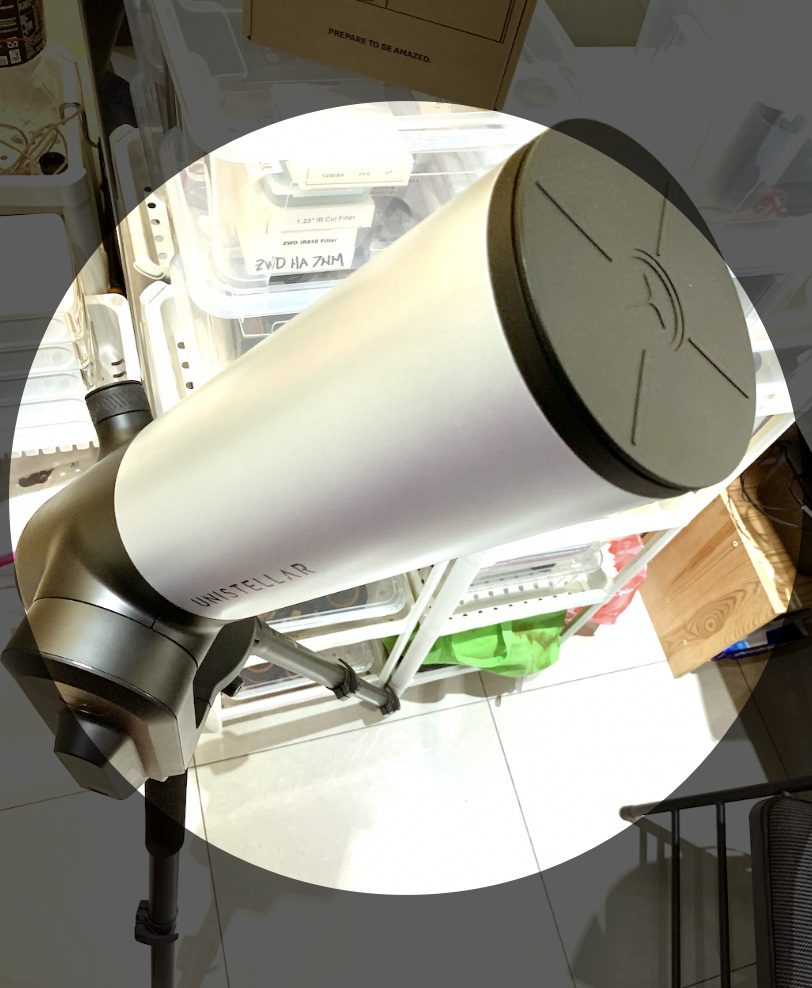
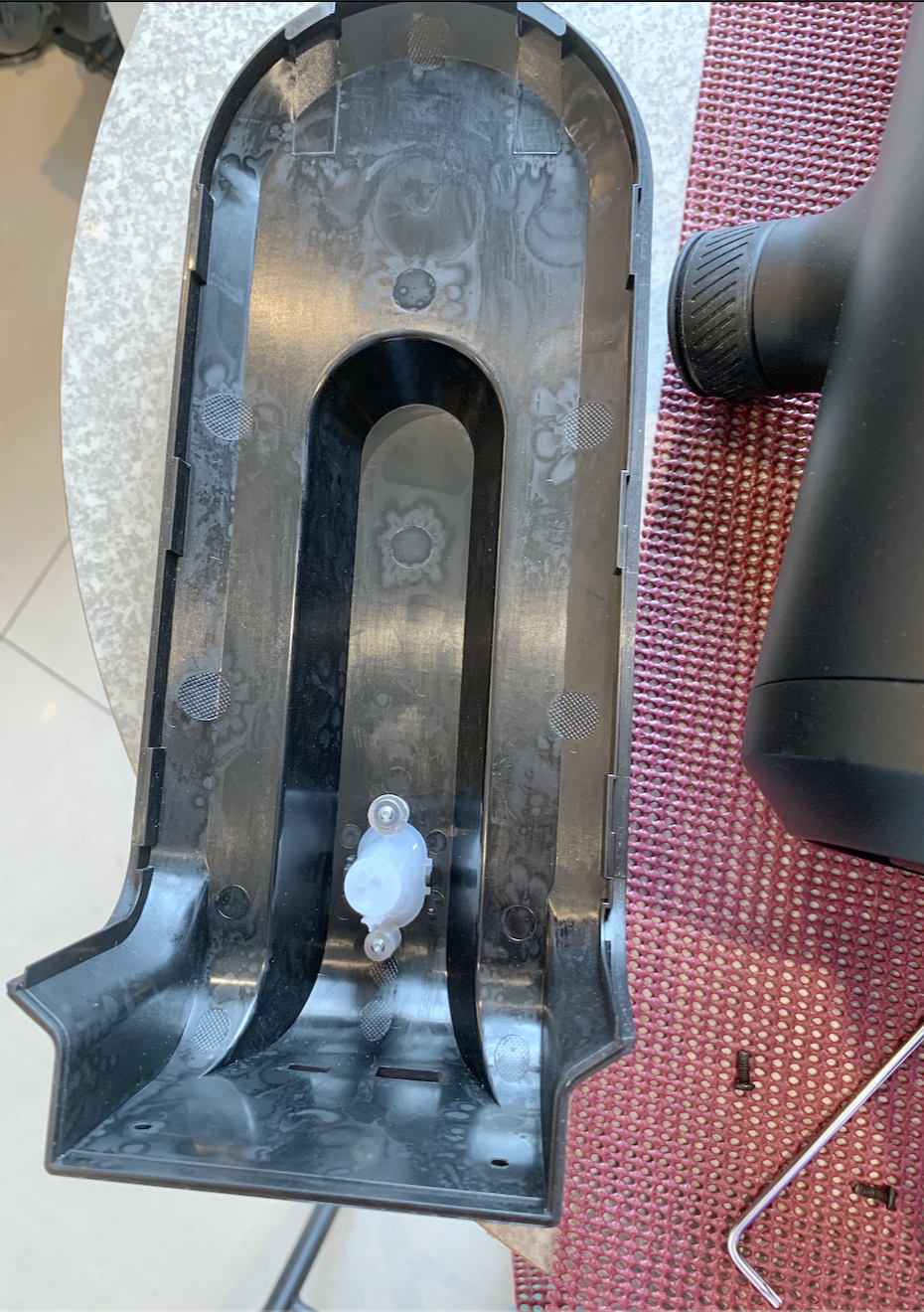
This story does not end well. The defective digital eVscope could not be fixed and it was given up, sent back to the dealer for refund.
Friday, December 11, 2020
Demise of the Defective Digital Evscope
This story does not end well. The defective digital eVscope could not be fixed and it was given up, sent back to the dealer for refund.
Wednesday, November 25, 2020
Make Your Own Military Grade Image Intensifier
All you need is a new iPhone and the latest incarnation of image intensifier apps
Night vision image intensifiers are used by the military to view objects in total darkness by amplifying a few photons. Now declassified technology, one can pick up a new or surplus image tube intensifier for several hundred or a few thousand USA dollars. But why do that when you can get a free phone app to do the same.
Now enter into the year 2020 where you can find almost anything in the form of a free app for your iPhone. MilkyCam is that app. It amplifies a totally dark sky, turning it into daylight by boosting the ISO by thousands of times. For this experiment, I tried three similar apps, each with slightly different features. The goal of this experiment is to determine the amount and direction of light pollution remaining at night during the darkest sky.
Taiwan Study
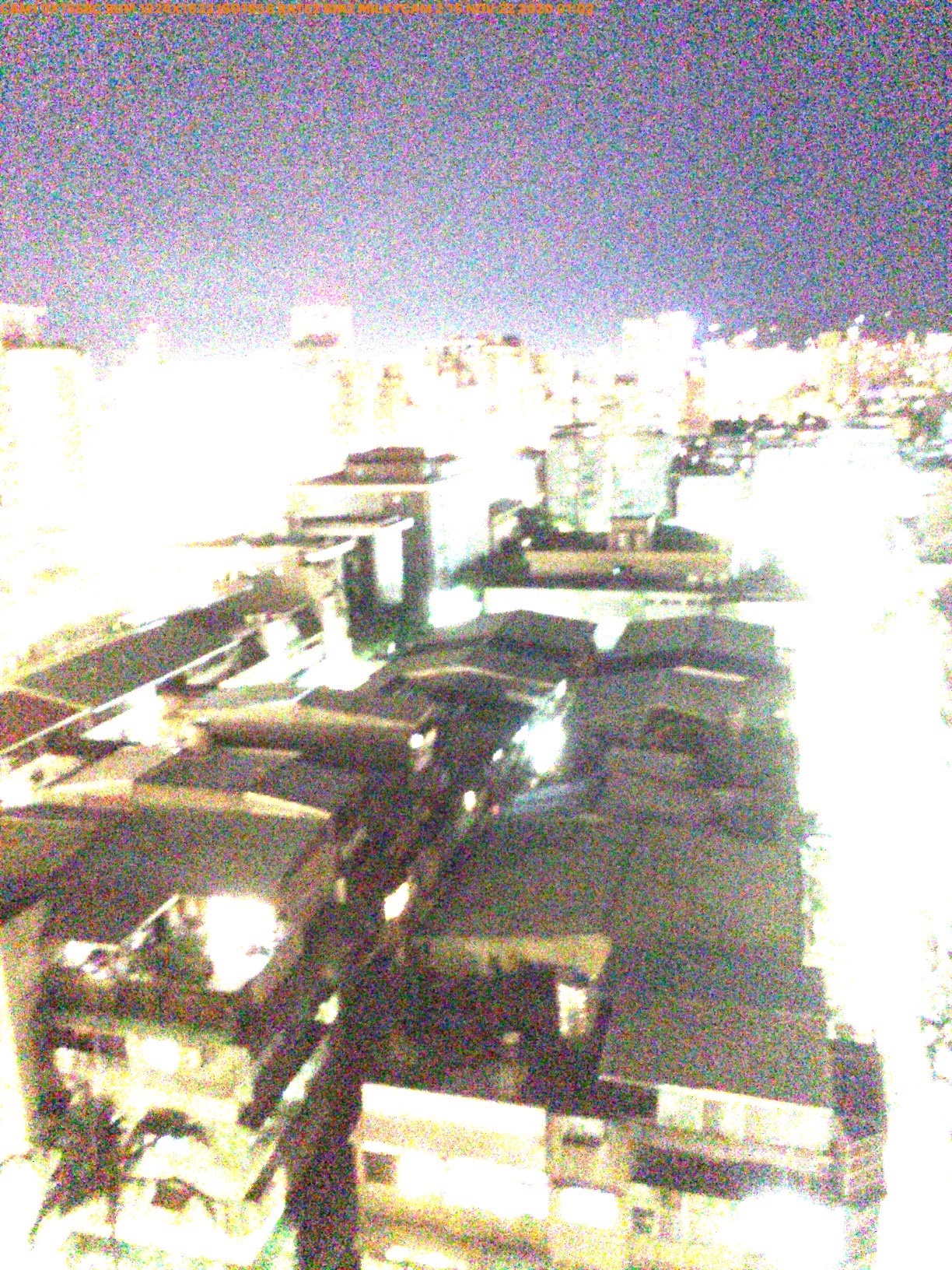
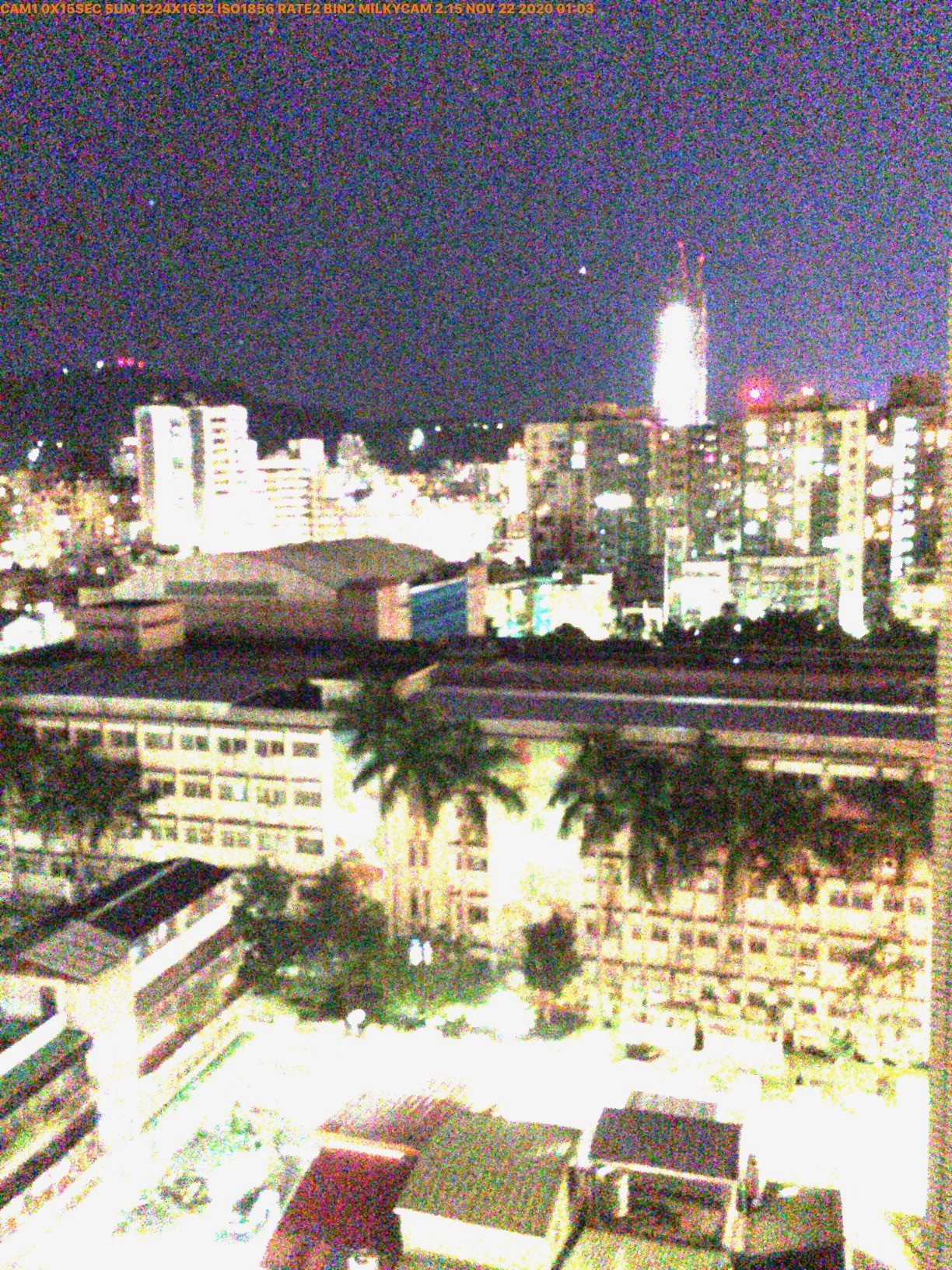
This study will determine nighttime sources of light pollution using an image intensifier app for a new Apple iPhone in the Taipei Taiwan area. The photos are shot with a handheld iPhone Xs Max and the app MILKYCAM set to the extremely fast ISO rating of 1,856. All photos have no processing. The image intensifier app is so powerful, it can take these images from a night view, to full daytime, and complete whiteout appearances. Aside from studying nighttime light pollution, the intensification app is also used for determining an analysis of clouds during the night, and spot checking the position of stars and celestial objects. Processing can remove grain and light pollution and the app can control the size of stars in the image. Pinpoint stars may disappear against the background photo noise and grain, but a slight enlargement of star diameter will bring stars into better visibility.
Photo 1 has a large parking skyscraper with large picture windows, illuminated from the inside out on every floor day and night. At the right, is a long stretch of road with an array of street lights that shine upward and down. The background skyline also has skyscrapers blazing with lights.
Photo 2 shows buildings fully illuminated from street lights and lights placed on the buildings that shine up and outwards. The only dark patches are from rooftops and a few scattered trees. The tall skyscrapers are fully illuminated from bottom to top. Every hallway has a window with light. In the first tall skyscraper, at least 12 of these windows are contributing the full illumination of the skyscraper and its surroundings. At the top are very intense lights continuously on, radiating in all directions. Adding more to the light pollution, the building balconies are all illuminated.
Photo 3 shows a tall new skyscraper under construction, and contributing the most to the light pollution problem. Other completed buildings are nearly as bad in light radiation. To the right is sky glow as it points towards the heart of downtown.
Tuesday, November 24, 2020
Brightest Stars
Special Brightest Northern and Southern Stars Event
By a streak of good luck, I managed to see both the brightest star in the Northern Hemisphere in Canis Major and the brightest star in the southern constellation Carina at the same time.
I'm lucky to live in the middle, an area termed as the transition of tropical to subtropical near the equator in the Pacific Ocean, where I can simultaneously see both northern and southern hemisphere constellations.
Tuesday, September 22, 2020
Flashing
by Mike Otis
All about Flashing. Maybe it's before your time, circa 1970s. We took spectroscopic film and treated it, with baking, or hydrogenating it in forming gas, or flashing it by exposing the film to low level light. We bought kits available from LUMICON.
During 1993,I invented a different kind of flashing, by exposing an active CCD sensor (SBIG ST4) to low level light. For the first time, itallowed remarkable images with ultra
In 2020, I invented another kind of flashing, again - this time, with computer image processing. Recently while experimenting with astro image processing on images of deep sky with only a few seconds exposure, I repeated the process of flashing, by putting a low level baseline across the image. Originally intended as a trial way to shoot in bad light pollution, extract images and improve the results, the side effect was to improve the image in a similar manner as the other two methods of flashing. Results are preliminary, but it does show there are ways to take exposures of a few seconds through light pollution and extract images.
Saturday, September 19, 2020
8 Bright Stars Orion Area
![]() |
| Source |
Currently at around 4 am, the sky displays the constellation Orion and these bright stars. The Great Orion Nebula is an ideal First Light target for a new working eVscope and the eight listed vicinity stars are perfect for focus and mirror calibration. All listed stars are brighter than second magnitude.
Betelgeuse - Orion (0 to 1.6 mag)
RA 05h 55m 10.3"
Dec +07° 24′ 25.4"
Rigel - Orion (.13 mag)
RA 05h 14m 32.3"
Dec −08° 12′ 05.8"
Sirius - Canis Major (-1.46 mag) Dog Star
RA 6h 45m 9s"
Dec -16° 42′ 58"
Aldebaran - Taurus (-.75 to -.95 mag)
RA 04h 35m 55.24"
Dec +16° 30′ 33.5"

Capella - Auriga (.08 mag)
RA 05h 16m 41.4"
Dec +45° 59′ 52.8"

Castor - Gemini (1.58 mag)
RA 07h 34m 35.9"
Dec +31° 53′ 17.8"
RA 07h 45m 18.9"
Dec +28° 01′ 34.3"

Procyon - Canis Minor (.34 mag)
RA 07h 39m 18.1"
Dec +05° 13′ 29.9"
Friday, September 18, 2020
Unistellar Evscope Aftermath

![]() |
| The night sky is perfect for running a new working eVscope through its paces. Visible is M42, and bright stars like Sirius, Capela, Rigel, Betelgeuse, and Aldebaran at around 4:30 am local time. |
In the aftermath of receiving a non-functional eVscope through OPT telescope dealer in the USA, I waited over 20 days for a replacement MicroSD card from Unistellar.
Thursday, September 17, 2020
Unistellar Evscope After Card Install
Wednesday, September 16, 2020
Evscope Card Replacement
If you have the beautiful and amazing new eVscope and Unistellar has determined it needs new software for proper functioning, a replacement microSD card may be needed. This is the story about how the card was replaced.
Remove the eVscope from the tripod and set it on a firm table with a special anti-slip grip matt. I used this arrangement to prevent any slippage during work and in the event of a sudden earthquake.

The security screw removal tool is everything - Taiwan makes this amazing TORX tool set forged from S2 Steel. One side is T10 Torx and the other side is TT10 Torx. The TT10 side has a center hole for removing the two security screws on the Unistellar telescope. (the security screw has a center peg) This Alstrong Tools Corp. www.alstrong.com toolset, made in Taiwan, was in stock and purchased today at a local hardware store in Taipei. It was conveniently located down the street, for only $13, a real bargain! The nine piece set name is "Extra long arm L tamper star wrench set, part number CDT-09X." Now it's time to remove the two screws, located one on each side of the telescope label.

With the two screws removed, slide the top cover plate, which includes the power switch, back towards you and remove it. Be very careful not to force anything.


You can see the second board under the top board. In the center is the microSD card. Fingers were used to feel the sensitivity of the card, its position, and then it was grabbed and gently removed. Then immediately, the new card was inserted, observing the cards position, top and bottom. Tools were not used to grip the tiny card as it could easily become flexed and damaged if using metal tools on it. Sometimes metal tools become magnetized and these can damage, modify or erase data stored on the card internally. Use common sense and exercise caution.

Now put the cover back on and install the screws. These screws have only slight pressure to hold in place. Now put the evscope back on its tripod do the first test - push the power button and hold a few seconds. The purple light will come on, release the switch, the light will stay on a short time followed by constant red light and you're good to go! The telescope should successfully boot up with the new software on the new MicroSD card.
When outside, remember to take a dark frame, then run more tests with the latest version app, take pics, etc. - ultimately focus on a bright star using the Bahtinov mask and also collimate the primary mirror. It's raining now but at 4am we're scheduled to have a beautiful clear sky with Venus and the Orion Nebula climbing high. We'll report how this goes in more blogs so stay tuned!
Tuesday, September 15, 2020
Evscope Security Screw
Unistellar and telescope owners loosely recommended a T10 Torx screwdriver to remove the telescope housing and replace the SD card. This is not precisely true. As T10 is a security screwdriver, I checked and had these in my toolbox and didn't give it any more thought. However, after the card arrived on Tuesday September 15th, I prepared to remove the telescope case and suddenly the screwdriver did not fit.
![]() |
| Actual screw on the eVscope that needs removal. A TT10 tool is needed - the screw has a center pin. |
![]() ![]() |
| At left, This is a T10 that will not work to remove the eVscope screw. At right, this is a TT10 screwdriver incorrectly labeled as a T10. |
Urban Heat Island
Urban Heat Island Defined
An urban heat island occurs in cities when the natural landscape is replaced by pavement, buildings, and other surfaces that absorb and retain heat. As a result, the materials create a hotter environment than rural areas. Temperatures can range from one to three degrees hotter during the day, and from three to seven degrees hotter at night! This “heat island effect” leads to increased energy costs, air pollution levels, and heat-related illnesses.
Monday, September 14, 2020
Moon & Venus
Monday morning, September 14, 2020 , Apple iPhone XS Max camera 4.25mm f1.8 2858x3812 790K, HEIF, ISO 2500 1/4 sec. exposure, 4:28 am, rising over Taipei Taiwan. Below: enlargement showing the phases, Moon's Earthshine, and the phase of planet Venus. Need to check other photos to identify star occultation.


Sunday, September 13, 2020
Light Pollution Limiting Magnitude
Determination of Limiting Magnitude under Taipei Light Polluted Skies

I use the OTIS scale which uses a direct relationship with the visible star magnitude. A sky that shows only magnitude 3 stars is rated as a 3. As the number ratings become larger, for example 5, the sky becomes more clear with less light pollution. The OTIS scale allows rating the most light polluted inner core cities such as New York, San Francisco, Tokyo, Taipei, etc. and can go beyond first magnitude into negative magnitude numbers.