Showing posts with label eyepiece. Show all posts

Wednesday, April 21, 2021

Testing Svbony Optics on the First Scope Telescope

Testing Svbony Optics on the First Scope Telescope

Tests included the 2x Barlow, .5x focal reducer, full focal length set of Svbony eyepieces (both Plössl and Aspheric) on the Celestron 3" f/4 Dobsonian First Scope Telescope. The results are surprising!

I UPGRADED my Celestron Signature Series FirstScope telescope using optical components from Svbony, including finderscope, focal reducer, barlow and new eyepieces. The results were exciting and surprising to say the least. Let's take a look at what was learned in the testing process.

First let's talk about the setup. I set the telescope on a small round table indoors and imaged through the closed clean patio window. The single pane of clear (white) parallel float glass is relatively optically pure and works well for quick tests and good focus inside the convenient environment of a bug free and perfect temperature telescope control room.

I selected a set of two types of eyepieces from Svbony, a reliable supplier of telescopes and accessories. The first set are Plössl and the second set are Aspheric. Note: different EPs are known to have different performances given short or long focal length mirrors. 

Svbony Set One
40mm Plössl
32mm Plössl

Svbony Set Two
23mm Aspheric
10mm Aspheric
4mm Aspheric

Focal Reducer
.5x

Barlow
2x

The results are surprising. The set of Aspheric oculars, with a more simple glass design, was vastly superior, giving sharp focus bright images across the FOV. The views were dazzling and exciting!  Colors were exceptional, images formed clearly without distortions or aberrations, and the low cost of each eyepiece fit well with First Scope Telescope (a set of all three eyepieces currently costs $26.18, just a little over $8 each!). These EPs have outperformed other brands costing several hundred dollars each.

Another positive and greatly welcomed factor is the light weight of each ocular - weighing almost nothing - it does not upset the predetermined non-adjustable balance of the OTA. Aspherics won out over numerous other brands, for example, a 4mm Celestron ocular known for producing dim images has extremely tiny lenses that don't admit much light at all and it was very difficult for visual observing with an almost non-existent exit pupil. However, the Svbony Aspherical 4mm eyepiece was a pleasant surprise with its large diameter lenses, a comfortable exit pupil for visual observing, and exceptionally bright clear images especially for a short focus EP at high power.

However, given the fast focal length f/4, the Plössls, both 32mm and 40mm were a different story. Visual observing produced a black round spot in the middle of the fov, i.e. a shadow of the secondary, which can happen when the exit pupil is wider than 7mm. Clearly, the long focal lengths of these Plössls do not match the short focal length of the mirror. Therefore in conclusion, the Svbony Aspheric eyepiece set is the real winner and highly recommended for use with the F/3.95 Celestron First Scope Telescope.

Focal Reducer & Barlow Testing
Bonus Tip: Those thinking about trying a focal reducer ($9.45) with any of the tested eyepieces will soon realize the telescope does not have focus in range. However, the 2x Svbony Barlow ($7.90) is another big winner and works exceptionally well, even at the highest power when changing the 4mm into a 2mm. With the telescopes 76mm (2.99") aperture and 300mm (11.81") focal length at f/3.95, this gives 150x with tac sharp clear images. The Svbony 2x Barlow worked well with all three aspheric eyepieces (including the 23mm and 10mm) and is highly recommended for the Celestron First Scope.

Top left - Svbony .5x focal reducer attaches to the eyepiece. Left below - Svbony 2x Barlow also threads into a 1.25" eyepiece. The finderscope will be reviewed at a later date.

Celestron Firstscope Telescope Specs
Design - Newtonian Reflector
Style - FirstScope Signature Series
Manufacturer - Celestron
Mount - Dobsonian
Drive - None
Diameter - 2.99 inches (76mm)
Focal Ratio - f/3.95
Focal Length - 11.8" (300.2mm)
Prime Focus - 12x
Eyepieces - Original Celestron eyepieces melted
Resolution Rayleigh - 1.83 arc seconds
Resolution Dawes - 1.53 arc seconds
Limit Stellar Magnitude - 11.9
Light gather power compared to human eye - 118x
Adjustments - None
Highest Useful Magnification - 150x
Lowest Useful Magnification - 12x

Owner Added Accessories
* Svbony Aspheric Eyepiece One - 62 Deg., 23mm (.9") = 13x
   with 2x Barlow = 26x
* Svbony Aspheric Eyepiece Two - 62 Deg., 10mm (.4") = 30x
   with 2x Barlow = 60x
* Svbony Aspheric Eyepiece Three - 62 Deg., 4mm (.16) = 75x
   with 2x Barlow = 150x
* Svbony/Celestron Finderscope - 5x24, Plastic, Crosshairs, Focus
* Celestron iPhone Software - Sky Portal
* Computers - Apple Mac
* Image Processing Software - Apple System Photos, Mooii Tech PhotoScape X,
   GIMP, Soggy Waffles Paintbrush
* Apple Camera - iPhone
* Zwo ASI224MC Camera
* Svbony Focal Reducer - NA
* Svbony Barlow - 2x
* Svbony - Filters

Sunday, September 6, 2020

Celestron FirstScope - Eyepiece Tip

A good eyepiece for the Celestron FirstScope
based on the condition of the secondary
diagonal mirror and the low focal ratio is this
Aspheric eyepiece with a wide diameter lens
that lets in maximum light.
Celestron FirstScope - Eyepiece Tip

The photos show two eyepieces, one that works well and one that does not work well. For the best images, a good eyepiece will have a wide diameter lens combination which gives a large field of view.

This eyepiece has a very small
diameter lens and difficult exit
pupil, which causes a number
of problems with the short
focal length and 
diagonal
secondary 
mirror compromise
on the Celestron FirstScope.

At top, the photo shows an aspheric lens combination, which is a simple arrangement to pass the largest amount of light - a good combination for a 2.99-inch telescope.

Aspheric eyepieces are also light weight, and come coated with a black interior and antireflective coatings. The barrel is threaded for filters and was successfully used with a threaded 2x Barlow and a threaded .5x Focal Reducer.

Also noted is the entire set of aspheric eyepieces have larger lens diameters compared to other designs such as Orthoscopic, Plossl, etc. Aspherics also have the advantage of high performance and lower cost.

Friday, September 4, 2020

Celestron FirstScope Test Accessories


FirstScope Project: Test Accessories

Finally this is what we are all waiting for! Project Test, More Eyepieces, Focal Reducer, Barlow Lens, Focus Test, RFT Results


First, for our main tests we used the 10mm 62 degree Aspheric eyepiece from Svbony, which is the best performer in the Celestron FirstScope. The Celestron is an RFT with a focal length of only 12-inches and a defective secondary mirror. Nevertheless, the small Moon appears extremely bright.

In keeping right on budget, none of the accessories exceeded $14 in cost.

The big problem encountered was the handheld iphone could not adjust for all the light coming through the eyepiece. A Moon filter could not reduce the light in any significant amount and was set aside. Next I tried a polarizing filter. Still the moonlight was far too intense. Finally the tests were shot with the overexposed Moon. The first image shows the Moon image scale through the 10mm 62 degree Aspheric eyepiece.

The next image shows the Moon with the same eyepiece and an attached Svbony .5x focal reducer screwed to the bottom of the eyepiece.

In the third image, the eyepiece and a 2x Svbony Barlow were used. The Barlow screws to the bottom of the eyepiece. The change in image size is apparent.

Next, a 32mm and 40mm focus Plossls were test and they did not do well with the scope. The Moon had the image of the mirror and eyepiece superimposed over it. These fast eyepieces just don't work in this telescope. The final photo shows another type of obstruction defect that occurs, blocking out most of the Moon.

In all tests, the full uncropped size of the iPhone camera is retained.

Finally a really big problem surfaced. Due to the fast f3.9 focal ratio of the mirror, and perhaps inclusive of the subpar optical system, the focus could not be achieved over the entire region of the Moon. Thus focus had to be interpolated and approximated. Even a Bahtinov mask could not help this probem.

In conclusion, aside from the inherent problems with the Celestron FirstScope:

* Aspheric eyepieces with medium focal lengths do well with the f3.9 system
* Images are small and bright
* The focal reducer is working well
* The 2x Barlow is working well
* The telescope produces Moon images that are too bright for iPhone imaging
* The scope may have its place with deep sky objects

All experimental project Moon images were shot on the night of Friday, September 4th, 2020.

Celestron FirstScope - Index
https://otisastro.blogspot.com/2020/08/celestron-firstscope-index.html

Thursday, September 3, 2020

Celestron 4mm Eyepiece

Celestron 6mm 1.25" Eyepiece Review

Conclusion: Stay clear of this dog

We bought the Celestron 6mm focus low profile eyepiece to use in a set of oculars for our small limited budget Celestron FirstScope and other telescopes.

I thought the small profile would weigh less and be ideal for small preset telescopes that are affixed to their mounts. Unfortunately I was wrong.

The heavy 6mm Celestron eyepiece is a dog. It has added weight and contributes to offsetting the fine balance of the telescope. It has one tiny itty bitty coated lens with a tiny diameter of a mere 4mm - it does not let enough light through to see much of anything. The exit pupil of 1mm is almost nonexistent! You're sure to see nothing through this useless accessory.

The worst problem happens with either visual observing or photo imaging because the limited FOV is severely restricted . On top of that, it does not produce good images. The color is off and the objects are dim. The worst problem is the exit pupil. It's only 1mm with the Celestron FirstScope, and much too small. A human eye cannot get close enough to the tiny opening to see anything, either with or without glasses.

The interior is coated flat black and the housing is threaded for filters. You'd definitely want to use a filter to help clean up the achromatic and chromatic color aberrations with fringing around the FOV.

Advertising has no specs and no information about the one tiny lens design. It's probably just a spherical mass produced uncorrected lens. It has a ring of color aberrations and fringing. The only redeeming features are the lens is made from glass and the housing is metal so it won't melt like the other two plastic Celestron eyepieces that were included with the Celestron FirstScope. It's hard to believe a company would put out such trash with a high cost. Caveat Emptor - let the buyer beware!

Recommendations: do not buy this eyepiece, it's a real dog

Advantages
* threaded for filters
* glass lens won't melt
* metal barrel is durable
* interior coated flat black
* anti-reflection coated lens
* low profile
* screen printed with type and focal length

Disadvantages
* Too Heavy
* too expensive for poor performance
* Bad exit pupil barely 1mm
* Difficult to use, results are bad
* eye cannot get close enough to see anything
* lens diameter is too small
* achromatic aberrations are severe
* Bad chromatic abberations
* images are soft and not sharp
* images are dim
* the FOV is too restricted
* bad single lens poor design
* lens is likely uncorrected
* introduces image distortion
* Optically poor
* Barrel threads jammed and won't disassemble for cleaning
* old discontinued product

Tip: To calculate the exit pupil of a telescope, divide the focal length of the eyepiece in millimeters by the focal ratio of the scope. For example, a 25mm eyepiece used in an f/5 scope delivers an exit pupil of 25/5=5mm, while a 35mm eyepiece in the same scope delivers an exit pupil of 35/5=7mm.

Saturday, July 4, 2020

Aspheric Eyepieces by Svbony

Calibrating the scale and weighing the 10mm EP gives .97oz., exactly as specified by Svbony
Compare 23mm to 23mm, the fat Celestron Luminos
EP setting on the scale is an irregular shaped massive

overweight boat anchor that was not usable on smaller
telescopes. On larger scopes it upset the counter-
balancing significantly. Seen here, the Luminos EP
overloaded the 10,000 gram scale. The aspheric

23mm eyepiece is seen at top left.
Introducing Fantastic Aspheric Eyepieces by Svbony Optics
These aspherics are the Cat's Pajamas!

Different lens designs have different performances with various telescope mirrors. Some oculars will set you back $600 to $1200 and yet perform poorly on half of the telescopes you may own. Others, like the aspheric design, may cost $9.50 and give phenomenal performance!


Nice Big Lenses
The aspheric design has large diameter lenses
ideal for both visual eyepiece projection and
astrophotography. At left, the lens is .87 inch

in diameter and at right .39". Their EP lengths
are 2.36" and 1.69" and adapt well to projection
with the Apple iPhone camera. The exit pupil is
generous and considered just right. The barrel
construction is from very light weight materials
trimmed in gold, chromed on the lower half,
engraved with a flat black interior.

As an optician, experimenter and inventor, I like to try new lens combinations and see how they perform. Thus far, the aspheric oculars were tested on the f/3.9  2.99-inch diameter Celestron FirstScope and perform as real winners. The light weight of these EPs are idea for small telescopes that have no means to tube balance. Aspherics are somewhere in between complicated lens designs with many lens elements and a simple one lens. However, it works to correct aberrations such as spherical and astigmatism, and maximizes light transmission.

— if the single aspheric lens is ground and polished to 1/4th wave, then having an eyepiece with 6 or 7 lenses all at 1/4th wave adding their defects together is absolutely not preferred 

The asphere's more complex surface profile can reduce or eliminate spherical aberration and also reduce other optical aberrations such as astigmatism, compared to a simple lens. A single aspheric lens can often replace a much more complex multi-lens system. Wiki

My set of aspherics range in cost from free to about $14. I have dedicated a 10mm 62 degree and 23mm 62 degree to the FirstScope as the best oculars for this telescope. In the future, I will definitely expand on my collection of this eyepiece type. Getting complete sets of aspherics can save thousands of dollars over other eyepieces. The images are bright and sharp with a compatible exit pupil due to a welcomed large lens diameter. No squinting necessary. The rubber top insulated eye stop protects the eye from bad weather that's to hot or too cold. The simplicity of performance is outstanding and ideal for EP projection and astrophotography or visual observing. They have a wider FOV compared to popular Plossls and these are the lightest weight EPs in my collection. The 10mm is 428 grams (15oz) and the 23mm is 666 grams (23oz). By comparison, the massive 23mm Celestron Luminos overloaded the 10,000 gram scale! According to Celestron, it weighs 1lb 13.3oz or 29.3oz. That's 30 times heavier than the aspheric eyepiece! Comparing both 23mm EPs, aspheric to Luminos, the aspheric has a much larger lens. The aspherics have a set of 4mm, 10mm, and 23mm as offered by Svbony for about $9.90 each. The weight is listed as 1.48oz, .97oz and 1.69oz respectively. Svbony has provided fast outstanding service.

In summary, the 1.25" aspherics are the bargain of the century, come fully packed in their own bags and boxes, are attractive with gold and chrome, low cost, high on performance, give bright images, have a wide FOV, perfect exit pupil (10 and 20), light weight, fully coated, have a rubber top eye stop/protector, are engraved, threaded for filters, and include full lens caps, plus they are sold online by Svbony, an excellent provider of astronomical telescopes and supplies.

Friday, June 19, 2020

My Equipment List

EQUIPMENT
The equipment list is used to determine which accessories and components are available for projects and research programs. Items are at multiple observatory locations.

Telescope - for more telescopes see
https://otisastro.blogspot.com/2020/06/a-list-of-my-telescopes-tasco-30x30mm.html

Celestron 14” Edge HD f/11 OTA
Celestron 9.25” Edge HD f/10 OTA
*** NEW! ***    Celestron NexStar 6SE 150mm f/10 Altazimuth GoTo
Orion Starblast 4.5" Tabletop Dob f/4
Orion Starblast 4.5" II EQ with Clock Drive f/4
Orion CT80 80mm (3.25") f/5 Doublet Refractor
Celestron 76mm (2.99") f/3.9 FirstScope Dob
*** COMING SOON!***     Acuter 60mm (2.4") Maksutov f/12.5  750mm fl
(2) Celestron 9x50mm (2") f/4.5 Finderscope
Svbony 6x30mm Metal Finderscope
(2) Celestron 5x24mm Plastic Finderscope

Other Telescopes
12.5" f/6 Newtonian
8" f/2 Schmidt Camera
4.25" f/11 Newtonian
Meade 60AT (2.4") Goto Refractor 350mm f/5.8

Former Completed Telescopes
1 - 40" Newtonian Dob with Belgian Plate Glass Primary *
2 - 50" Aluminized Plexiglass Reflector
2 - 8" Newtonian f/6 with Pyrex Mirrors
*Largest amateur telescope in the world (1970s, 1980s)

Returned Defective Telescope
4.5" Unistellar eVscope

Telescope Mirror
12" in Polishing Phase
4.25" RFT for Space Telescope

Telescope Mount
Celestron Edge HD CGX-L Equatorial GOTO
Celestron Nexstar 6SE Altazimuth GOTO
Celestron FirstScope Dob
Orion StarBlast EQ-1 Equatorial with Clock Drive
Orion StarBlast Dob

Tripod
3110 Long 4-section Camera Tripod
2 - Short Plastic Camera Tripod
Celestron NexStar 6 SE Tripod
Orion StarBlast Tripod
(Acuter 60mm Mak Tripod)

Camera
Zwo ASI224MC Color CMOS One Shot Camera
Canon CCD Camera
Apple iPhone Xs MAX Camera, Apps
Apple iPhone 5+ Camera, Apps
*Apple 8 iPhone Camera, Apps
Computer CAM
Wireless Cameras
2 - Remote Shutter

Eyepiece 1.25" Aspheric
2 - Svbony 4mm Aspheric
3 - Svbony 10mm 62 Deg Aspheric
3 - Svbony 23mm 62 Deg Aspheric

Eyepiece 1.25" Plossl
Orion Explorer II 6mm Plossl
Svbony 9.7mm Plossl 52 Deg (Super Plossl FMC)
Orion Sirius 10mm Plossl
Orion Explorer II 1.25" 17mm Plossl
Orion Sirius 25mm Plossl
Svbony 26mm Plossl 52 Deg  (Super Plossl FMC)
Svbony 32mm Plossl 46 Deg
Svbony 40mm Plossl 40 Deg
Celestron 25mm Plossl

Eyepiece 1.25" Plossl Illuminated Crosshairs
Celestron 12.5mm Plossl 40 Deg CrossAim Reticle

Eyepiece 1.25" Orthoscopic
Celestron 6mm

Eyepiece 2-Inch Plossl
Televue 55mm Plossl 50 Deg

Eyepiece 2-inch Other
2 - Celestron 23mm Luminos 82 Deg (6 Lens Design)

Eyepiece Zoom
Baader 1.25/2" 8-24mm Hyperion Clickstop Mark IV Zoom  

Focal Reducer
2 - Antares Focal Reducer 
1 - Celestron Focal Reducer f/6.3 with Field Flattener
4 - Svbony 1.25" .5x Focal Reducer Eyepiece Thread

Barlow
3 - 1.25" Svbony 2x Barlow Eyepiece Thread
1.25" Celestron X-Cel 2x Barlow
1.25" TeleVue 2x Barlow
1.25" Televue 2.5x Powermate
1.25" Celestron X-Cel LX 3x Barlow
1.25" TeleVue 3x Barlow
2" TeleVue 4x Powermate with built in 1.25" EP adapter

Filter Filter Graphs


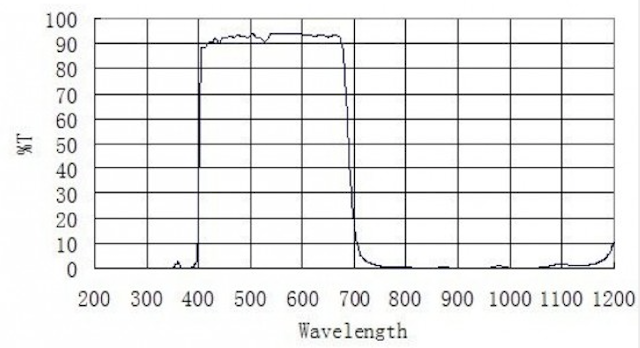
           contains the B filter which is IR cut only
           use the B filter with UV or V filter on Venus, B cuts off a 700nm

              use as a regular color cam

              use as a near IR b&w cam
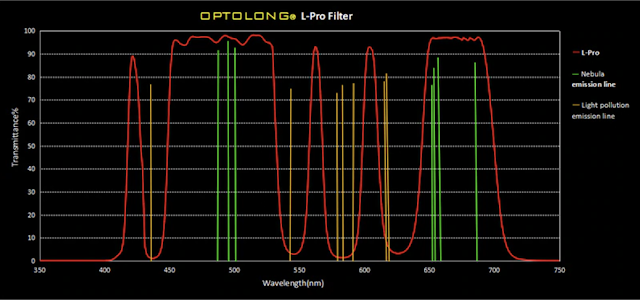
               light pollution

Svbony 1.25" LRGB Set SV127
             #15 Deep Yellow
             #58 Green
             #80A Medium Blue

Svbony Set 1.25"
             23A Light Red
             56 Green
             82A Light Blue
             21 Orange
             12 Yellow

              City Light Suppression, broadband


Svbony 1.25" CPL circular polarizer/linear
              1-40% light xmission, F9147A, cut atmospheric haze,
              reduce reflections in the atmosphere, shoot through glass,
 

              reduce the effects of seeing for planetary photography,
              contrast enhancement, passes infrared only,
              blocks wavelengths below 670nm to enhance contrast and surface detail
              and reduce the effects of seeing when used in IR-LRGB imaging of the
              moon and planets


*Orion Premium Set of 20 Filters
          #8 Light Yellow
          #11 Yellow-Green
          #12 Yellow
          #15 Deep Yellow
          #21 Orange
          #23A Light Red
          #25 Red
          #29 Deep Red
          #30 Light Magenta
          #32 Magenta
          #38A Blue
          #44A Light Blue-green
          #46 Deep Blue
          #47 Violet
          #56 Light Green
          #57 Medium Green
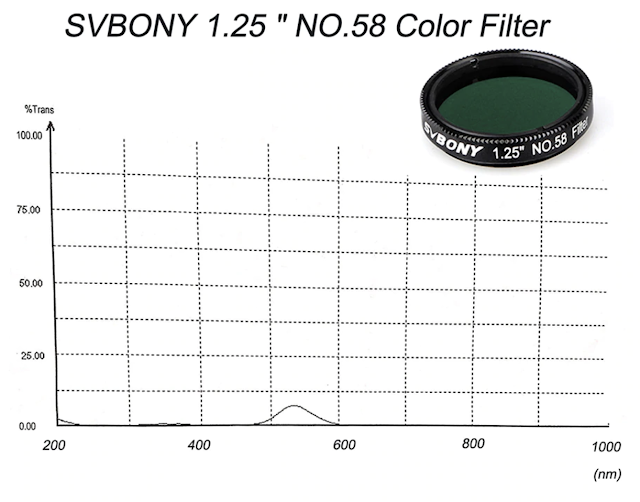
          #58 Green
          #64 Blue Green
          #80A Medium Blue
          #82A Pale Blue

Celestron Moon Filter 1.25" 18% 94119-A

Tech
Celestron SkyPortal WiFi Module
Celestron Starsense Autoalign
Celestron SkySync GPS
Celestron Focus Motor
Celestron VSP Vibration Suppression Pads
ZWO ADC Atmospheric Dispersion Corrector
1PC Portable Mini Precise Compass
Military Compass
Zwo Electric Filter Wheel
Red Laser
Green Laser
AngelEyes Brackets for Above Laser
Celestron Bino Viewer
Hercules Pro Imaging Flip Mirror
Zwo EFWmini Filter Wheel 5 Position 1.25″ electric
Svbony Manual Filter Wheel 5 Position 1.25"
Large Mirror Grinding Machine / up to 40-inch

Adapter
Baader 2” to 1.25” Reducer with T2
Baader 2” ClickLock Adapter (3.25” SCT thread, Visual Back to 2”)
2 - Svbony 1.25" 56mm Extension Tube
2 - Svbony 1.25" 70mm Extension Tube
Svbony 1.25" to 2" Eyepiece Adapter

Dovetail
2 - Svbony 42mm Dovetail Groove F9176A
Svbony Dovetail Bracket
Dovetail
Celestron Narrow Dovetail Bar for C9.25"

Cell Phone Holders
Celestron NEXYZ 3-Axis Universal Smart Phone Adapter
Cell Phone Holder Eyepiece Grip
Cell Phone Holder Screw Grip
Cell Phone Holder Camera Tap

Power
Celestron 5 Amp AC Power Adapter for Mount CGX/L
Celestron 5 Amp AC Power Adapter #18780 for Nexstar 6 SE
Meade Power Supply 12V 17ah

Star Diagonal
Celestron Nexstar 6 SE Star Diagonal 125" #94115-A
Celestron EdgeHD 14" Star Diagonal
Celestron EdgeHD 9.25" Star Diagonal

Misc.
Wireless Bluetooth Camera Shutter Release
Portable Observatory Tent (discontinued)
Orion 105mm Rings for CT80
Hercules 3 Turret Eyepiece Revolver

Lights
Red Light Headband
Nitecore TUBE v2 LED Key Chain Flashlight (Black)

Lens
Fisheye Lens
iPhone Lens Set, Fisheye, Macro, Wide Angle
All Sky Camera Lens for Zwo Camera
Asst. Set of Large Magnifying Glasses

Software
Celestron SkyPortal WiFi iPad App